
What Makes Sissy Maid Stories So Popular?
The maid uniform is one of the strongest visual symbols in feminisation fiction. A frilly apron, a fitted dress, stockings, heels, lace, bows or satin all carry meaning before a character says a word.
SISSY TRAININGCROSSDRESSING STORIESSISSY MAIDS
Emma LaVerne
10/9/202613 min read


Sissy maid stories have become one of the most recognisable and enduring corners of feminisation fiction.
They combine transformation, service, discipline, glamour, humiliation, longing and romance in a way that is instantly understandable to readers who enjoy gender-role fantasy. A man is not merely dressed up. He is trained, corrected, softened, made useful, made pretty and placed into a role where femininity is not just an outfit but a way of moving through the world.
That is the central appeal. The maid fantasy gives feminisation a structure. There are rules. There is a uniform. There is someone in authority. There are tasks to perform, standards to meet, mistakes to blush over and small moments of praise that feel far more powerful than they should. A sissy maid training story turns transformation into a daily life, not simply a single makeover scene.
In the Emma Loves a Dress series, books such as The Landlady’s Maid, Becoming Mistress’s Maid, Aunt Vera’s New Maid and Aunt Joan’s New Maid all use the sissy maid theme in different ways. Some lean into domestic service and discipline. Some draw on family authority, household rules and old-fashioned expectations. Others bring the fantasy into a more modern setting, where the maid’s role is not about polishing silver in a country house but learning obedience, femininity and self-acceptance in a recognisable home.
So why do sissy maid stories remain so popular?
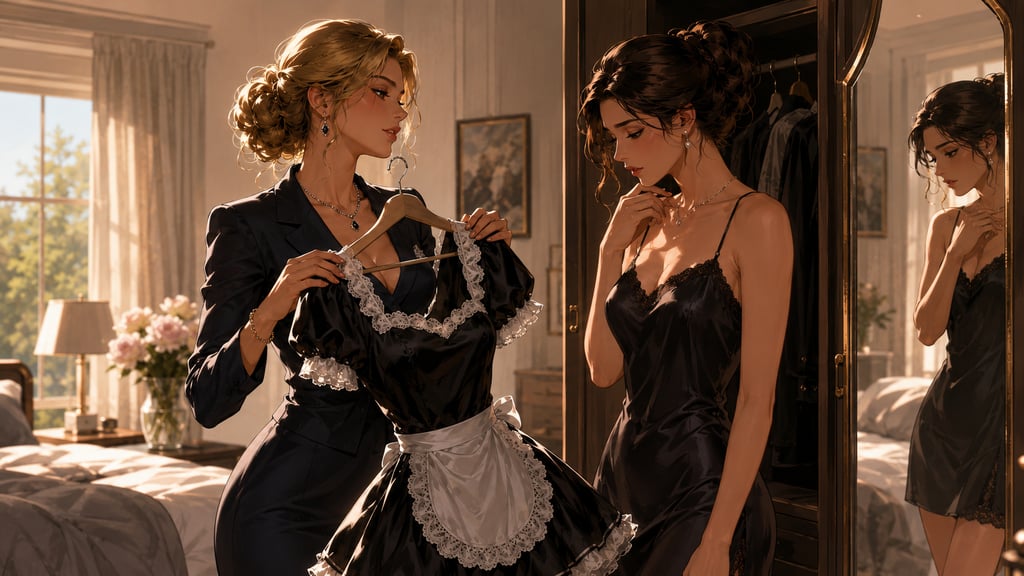

The Maid Uniform is Instantly Powerful
The maid uniform is one of the strongest visual symbols in feminisation fiction. Readers understand it immediately. A frilly apron, a fitted dress, stockings, heels, lace, bows or satin all carry meaning before a character says a word.
The uniform does several things at once. It feminises the body. It announces service. It makes the wearer visible. It also removes ambiguity. A man in ordinary women’s clothes might still be experimenting, hiding or pretending he has not gone too far. A man in a maid’s uniform has crossed a much clearer line.
That is why the uniform matters so much in The Landlady’s Maid. Tom’s transformation into Tilly is not complete simply because his body is made smooth or his face is made pretty. The full effect arrives when the satin maid’s dress, underskirts, apron, stockings and heels are all in place. The outfit does not just change how Tilly looks. It changes what she is expected to do.
The same principle applies across many sissy maid stories. The uniform is not only decorative. It is a kind of contract. Once it is worn, the character is no longer merely fantasising. They are inside the role.


Sissy Maid Stories Give Transformation a Clear Structure
Many feminisation stories revolve around a makeover: hair removal, lingerie, makeup, nails, dress, shoes, wig or styled hair. That sequence is satisfying because it gives readers a sense of escalation. Each step makes retreat harder.
Sissy maid stories go further. After the makeover, the character must live with the result.
That is where the appeal deepens. A maid must learn how to stand, walk, curtsy, speak, serve, clean, cook, answer politely and accept correction. Femininity becomes practical. False nails make ordinary tasks harder. Heels change posture. Underskirts alter movement. Makeup must be maintained. A pretty dress may be beautiful, but it is also a constant reminder of the role.
In The Landlady’s Maid, Tilly’s training begins with physical transformation but soon becomes domestic discipline. She learns how to move through a modern townhouse, polish surfaces, serve drinks, prepare meals and present herself properly. The story works because the feminisation does not stop at the mirror. It enters the kitchen, the hallway, the bedroom, the front door and the daily routine of the house.
That structure gives readers something to follow. A sissy maid story is not just “he becomes pretty.” It is “he becomes pretty, then learns what being pretty and useful now requires.”
The Power Dynamic Is Clear And Compelling
Sissy maid fiction usually depends on a strong power dynamic. There is often a Mistress, landlady, aunt, employer, wife, older woman or dominant figure who sets the rules. She may be strict, amused, affectionate, severe or quietly possessive, but she gives the fantasy shape.
This authority figure matters because she sees what the male character may not be ready to admit. She notices softness, obedience, vanity, secret longing or hidden femininity. She may push, test, instruct or punish, but she also gives permission for the transformation to happen.
In Becoming Mistress’s Maid, the power of the story comes from the idea that service is not casual. The maid is being shaped to meet a Mistress’s standards. The fantasy is built around correction and approval: a dress must be worn properly, tasks must be completed neatly, speech must become respectful, and the maid learns that pleasing Mistress brings a strange kind of relief.
In Aunt Vera’s New Maid and Aunt Joan’s New Maid, the authority has a different flavour. The aunt figure brings family pressure, domestic knowledge and a sense of old-fashioned female control. The feminised character is not simply being dressed for a night out. He is being absorbed into a household order where women know the rules and the new maid must learn them.
That is one reason readers enjoy this niche. The power dynamic is easy to understand, but it can be varied endlessly. A stern landlady is not the same as a refined Mistress. A practical aunt is not the same as a glamorous employer. Each version offers a different route into feminisation, service and surrender.
Humiliation Works Because It Is Personal
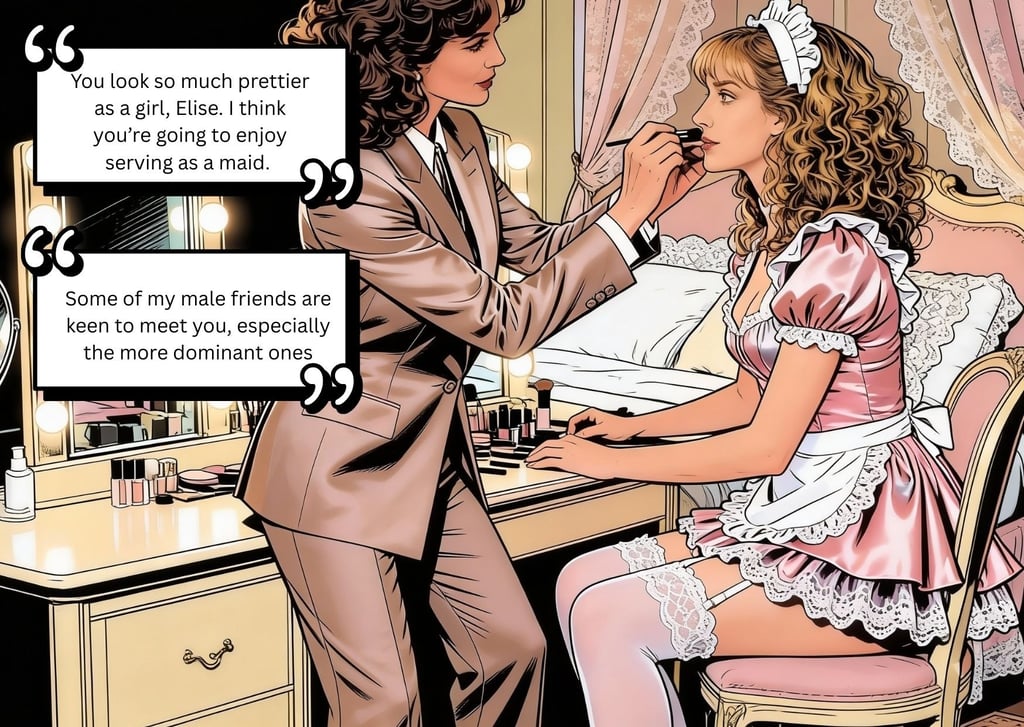
Sissy maid stories often include embarrassment and humiliation, but the best versions do not treat humiliation as random cruelty. It works because it is personal and emotionally specific.
A character may be humiliated by being seen in a maid’s dress, corrected for clumsy movement, told to curtsy properly, asked to serve guests, or made to realise that others accept the feminine role more easily than expected. The embarrassment comes from visibility. The character cannot hide behind masculinity anymore.
But humiliation in this kind of fiction is not only about shame. It is often mixed with excitement, relief and recognition. The maid blushes because the situation is exposing. Yet the same moment may also feel strangely right.
That tension is central to The Landlady’s Maid. Tilly is embarrassed by being dressed and trained, but she also discovers pleasure in the rules, the satin, the service and Celia’s approval. The humiliation matters because Tilly is not empty. She has pride, fear, desire and a growing sense of self. The blush is not a cheap reaction. It marks the moment when the old self and the new role collide.
That is what strong sissy maid fiction does well. It makes the humiliation intimate rather than generic.
Service Creates Emotional Intimacy
One of the most interesting things about sissy maid stories is that service can become emotionally intimate. At first, the maid may be serving because she has been ordered to. She prepares drinks, cleans rooms, folds laundry, makes beds, answers the door or waits for instruction.
But over time, service can become a way of noticing.
The maid learns what Mistress likes. How she takes coffee. When she needs silence. Which room should be prepared before she enters. Whether a hard day requires a drink, a meal, a soft word or no words at all. Service becomes attention, and attention can become affection.
This is one of the reasons The Landlady’s Maid has a strong romantic thread. Tilly begins as a tenant working off arrears, but her service gradually reveals how lonely and controlled Celia is. The household arrangement becomes more complicated because Tilly is no longer merely useful. She becomes emotionally present in Celia’s life.
That is a powerful element of sissy maid fiction. A maid may begin as a symbol of submission, but she can become the person who understands the dominant woman most closely. The work of service creates closeness. Folding clothes, preparing meals and waiting quietly can carry more romantic meaning than a grand speech.
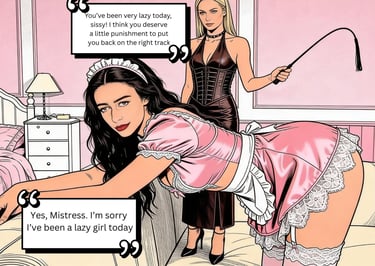
The Domestic Setting Makes the Fantasy Feel Real
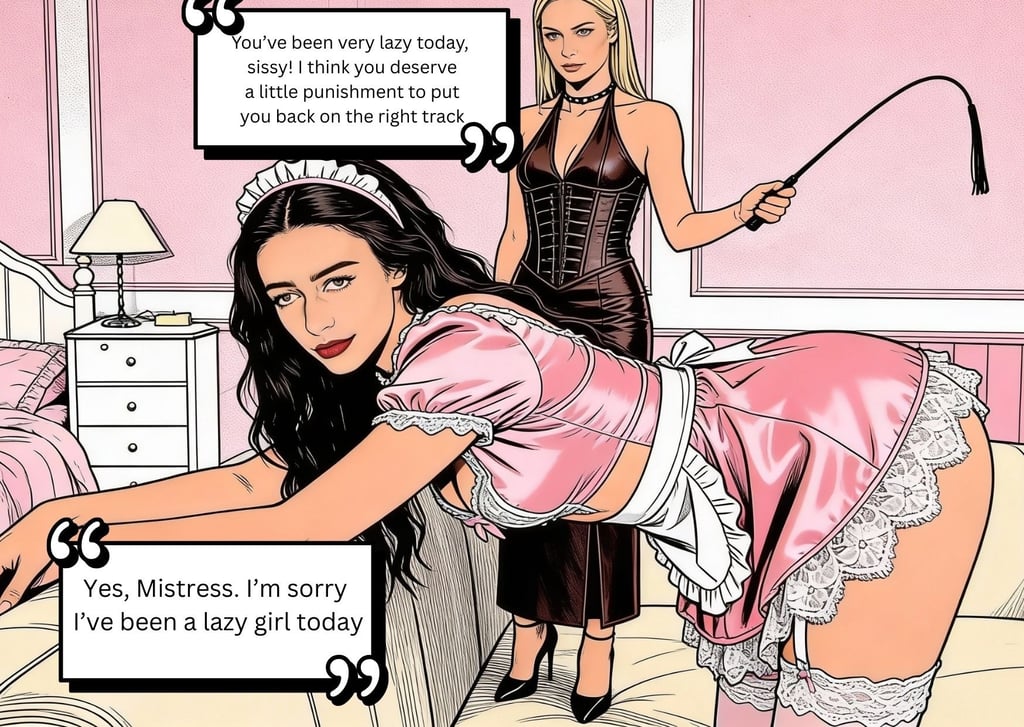
Sissy maid stories often work best when the setting is domestic. A house or flat gives the fantasy a contained world. The rules make sense there. The uniform makes sense there. The transformation can be tested in ordinary tasks.
A country house can create grandeur, tradition and old-fashioned authority. A modern home can create a different kind of charge: clean surfaces, smart kitchens, laundry machines, glass doors, home offices, deliveries, guests arriving at the door. The fantasy becomes less distant and more immediate.
That is why The Landlady’s Maid feels different from more traditional maid-training stories. The setting is a modern townhouse, not a dusty mansion. Tilly is not just dusting antiques or carrying trays through candlelit corridors. She is cleaning glass, managing laundry, preparing dinner, answering modern domestic demands and learning how femininity works in a current, recognisable home.
By contrast, stories such as Aunt Vera’s New Maid and Aunt Joan’s New Maid can use the older domestic authority of the aunt figure. These stories often draw strength from the idea that the home has established rules already. The new maid must fit into them. That creates a different kind of pressure: less sleek, perhaps, but more rooted in family, tradition and expectation.
Both approaches work because the home becomes a training ground. The maid’s femininity is not abstract. It is tested every time she carries a tray, answers a bell, smooths her apron or tries to remember her place.
Readers Enjoy The Contrast Between Masculinity And Femininity
A sissy maid story often begins with contrast. The male character may be rough, careless, arrogant, lazy, shy, practical, masculine or simply unused to being seen as delicate. The maid role then imposes softness, neatness, prettiness and obedience.
That contrast creates drama.
A large man struggling with stocking clips. A confident man unable to walk in heels. A proud man being told to lower his voice. A careless man learning to protect painted nails. A masculine character realising that lace, satin and service affect him more deeply than he expected.
The more carefully this contrast is written, the stronger the transformation feels.
In The Landlady’s Maid, Tom’s shift into Tilly works because it is practical as well as emotional. The false nails alter how she uses her hands. The satin lingerie changes how she feels her body. The underskirts change how she moves. The maid’s dress makes her visible. The heels force posture and discipline. The styled hair completes the transformation because it is her own hair, shaped into femininity rather than covered by a wig.
Readers enjoy seeing masculinity undone not by one single magic switch but by many small corrections. Each detail matters...


The Curtsey, The Apron And The Rules All Carry Meaning
Sissy maid stories are full of rituals. The curtsy. The apron tied at the waist. The inspection of uniform. The morning routine. The correct way to address Mistress. The act of standing with hands folded. The requirement to ask permission.
These rituals are popular because they make the fantasy visible and repeatable.
A curtsy is not just a movement. It shows respect, submission and grace. It makes the maid lower herself physically, but in a controlled and feminine way. An apron is not just a garment. It marks service and frames the body. Rules are not just restrictions. They create rhythm and expectation.
That is why maid training stories often become more satisfying after the first transformation. The reader wants to see the character practise, fail, blush, improve and begin to take pride in doing things properly.
In Becoming Mistress’s Maid, that sense of ritual can be central: learning what Mistress expects, understanding how to answer, how to stand, when to curtsy, when to wait and when to speak. The rules create tension, but they also create safety. The maid may feel exposed, but she knows the structure of the world she has entered.
Sissy Maid Fiction Can Be Light, Dark, Romantic Or Comic
One reason the sissy maid theme remains popular is its flexibility. It can be written in many tones.
A lighter version may focus on embarrassment, humour, pretty clothes and affectionate discipline. A darker version may explore control, shame, loss of status and the fear of being seen. A romantic version may use service to build love and trust. A comic version may enjoy the awkwardness of a new maid trying to walk in heels, manage underskirts or answer the door while flustered.
The best stories often mix several tones.
A scene can be funny because the maid is awkward. It can be sensual because the clothes and corrections are intimate. It can be emotional because the character secretly wants approval. It can be humiliating because someone else sees what has happened. It can be romantic because the dominant figure is not merely using the maid, but gradually caring for her.
This tonal range gives writers room to create fresh books within the same niche. The Landlady’s Maid uses modern domestic intimacy. Becoming Mistress’s Maid can lean more strongly into Mistress and servant dynamics. Aunt Vera’s New Maid and Aunt Joan’s New Maid bring in family authority, expectation and the unsettling power of being remade by older female relatives who know exactly what they are doing.
The shared theme is feminisation through service. The emotional flavour can change from book to book.
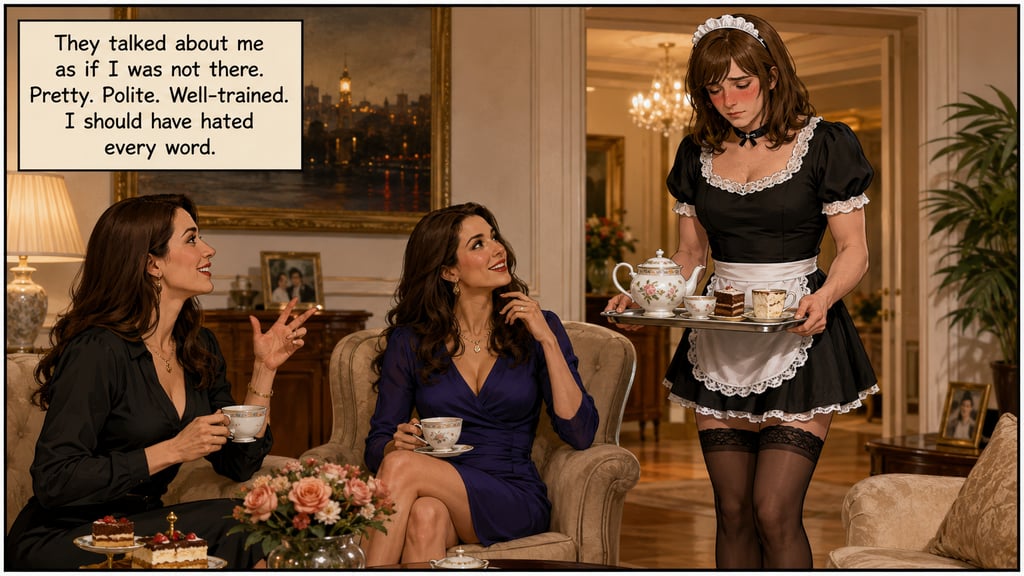
The Fantasy Is About Becoming Useful and Desired
At its heart, the sissy maid fantasy is not only about being dressed as a maid. It is about being made useful, seen and desired in a new way.
Many male protagonists in feminisation fiction begin with a limited idea of themselves. They may see femininity as weakness, decoration or something that belongs to other people. The maid role forces them to experience femininity as discipline, beauty, structure and power of a different kind.
A maid is useful, but she is also watched. She is corrected, but also admired. She is humbled, but sometimes treasured. That mix is central to the fantasy.
In The Landlady’s Maid, Tilly’s final acceptance matters because she is not simply trapped in a role. She chooses to stay, with love and boundaries now part of the arrangement. That choice gives the story emotional weight. The maid is no longer only a punishment or a costume. She has become a possible self.
That is why these stories can be so compelling. They are not just about losing masculinity. They are about discovering what might exist beneath it.
Why Sissy Maid Stories Keep Finding Readers
Sissy maid stories remain popular because they offer a complete fantasy framework. The visual appeal is immediate. The emotional stakes are clear. The rules are easy to understand. The transformation can be physical, psychological, romantic and social all at once.
Readers come for the uniform, the blushes, the rules, the humiliating little moments and the powerful women. They stay for the character journey: the gradual shift from resistance to obedience, from embarrassment to pride, from pretending to serve to secretly wanting to please.
For some readers, the appeal is glamour. For others, it is submission. For others, it is the romance of being seen by someone who understands the hidden self before the character does. And for many, it is the tension between shame and desire: the maid is embarrassed because she has been placed in a role, but she is also thrilled because the role fits too well.
That is the lasting power of the sissy maid story.
It takes something simple, a uniform, an apron, a curtsy, a household rule, and turns it into a full transformation. In the right story, the maid does not merely clean the house. She reveals what has been waiting inside the character all along.
Explore Sissy Maid Stories From Emma Loves A Dress
If you enjoy feminisation fiction, maid training stories and transformation romance, the Emma Loves a Dress series includes several books that explore the sissy maid theme from different angles.
Check out Emma's maid training novels here.
The Landlady’s Maid follows a modern, emotionally charged transformation as a lodger who cannot pay his rent becomes his landlady’s satin maid and gradually discovers that service, femininity and love are more closely connected than he expected.
Becoming Mistress’s Maid explores the discipline, rules and charged intimacy of being trained to serve a powerful Mistress.
Aunt Vera’s New Maid and Aunt Joan’s New Maid bring a family-authority twist to the maid fantasy, where older women reshape a reluctant male character into a feminine domestic servant under their watchful care.
Together, these stories show why the sissy maid fantasy continues to appeal: it is visual, intimate, structured, emotional and full of transformation. The maid uniform may be the first thing readers notice, but the real story begins when the character has to live inside it.


Training Maid Sophie
A new addition to the collection is the two-part Training Maid Sophie. Six months after leaving university, his life in London revolves around unpaid rent, ignored job applications and a flatmate who has finally lost patience. Then, late one night, he finds a strange advert online.
Live-in sissy maid required for private hotel on the Cornish coast.
At first, Colin laughs. It has to be a joke. A live-in role at the mysterious Winter Tide Hotel, owned by the severe Scottish proprietor Miss Fiona McFadden, offering food, accommodation and a one-month trial in exchange for service, obedience and full feminisation. It sounds absurd, humiliating and impossible.
But it also comes with a roof over his head.
Almost on impulse, Colin applies. To his surprise, Miss McFadden replies. She sees something in him that he does not yet understand, and before long Colin is on a train to Cornwall, leaving his old life behind.
At the Winter Tide Hotel, he discovers a remote gothic world of iron gates, stormy seas, strict rules, polished corridors and secrets kept behind closed doors. The hotel caters to wealthy, discreet guests with very particular tastes, and Colin is not there as a guest. He is there to be trained.
With the help of Emma, the pretty maid he is replacing, the blunt but kind Mrs Clarke, the sharp-eyed Fran, and the clinical Miss Gilbert, Colin’s first day becomes the beginning of something far deeper than dressing up. His body is prepared, his old clothes are taken away, his reflection changes, and by evening he is standing in a satin maid’s uniform, answering to a new name.
Sophie.
Training Maid Sophie Part 1 is a slow-burn feminisation and sissy maid transformation story told in journal form. Sensual, atmospheric and psychologically intense, it follows Colin’s first steps into service, femininity and obedience at the Winter Tide Hotel.